Most advice about hooks assumes you are writing a script. When you cut clips from a podcast, an interview or a webinar, you cannot rewrite what was said. You can only choose where the clip starts. The good news is that long recordings are full of natural hooks, because people say striking things when they talk freely. The skill is finding them and building the clip around them.
What a hook has to do
The first line of a short video has one job: give a stranger a reason to keep watching. It can promise something useful, open a question, or say something surprising enough that people want the explanation. What it cannot do is warm up. Greetings, context and “so, as I was saying” all lose the viewer before the clip begins.
A hook only earns attention; the rest of the clip has to keep it. For how long that rest should run, see how long a short clip should be.
Six hooks hiding in long recordings
Spoken conversation produces the same few shapes of hook again and again. Learn to spot them and you will find several in almost every recording.
- The bold claim: “Most intros are far too long.”
- The number: “We posted a hundred videos in a hundred days.”
- The confession: “The biggest mistake I made was hiring too fast.”
- The question: “Why do some clips get ten times the views?”
- The contrast: “It got 200 views. The next day, a clip from my kitchen got 90,000.”
- The instruction: “Stop putting your logo at the start.”
Find them in the transcript
Reading is faster than watching, so search the transcript. Words like “mistake”, “never”, “actually”, “the truth is”, “most people” and “I was wrong” often sit right next to a hook, and so do numbers.
Mark each candidate line, then read the thirty seconds after it. A hook only works if the clip pays it off; a great first line followed by a ramble is a clip people abandon halfway.
Start the clip on the hook
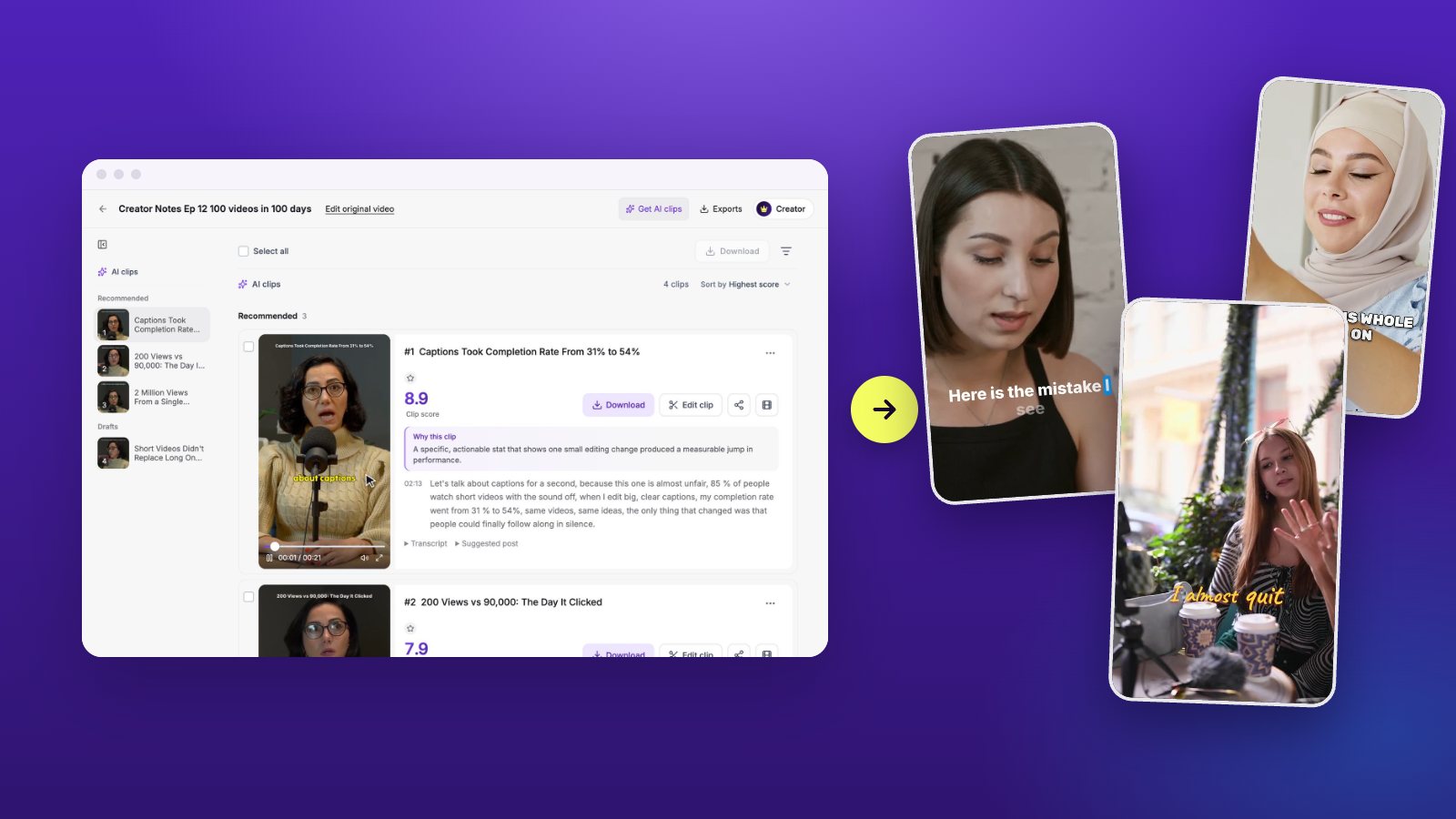
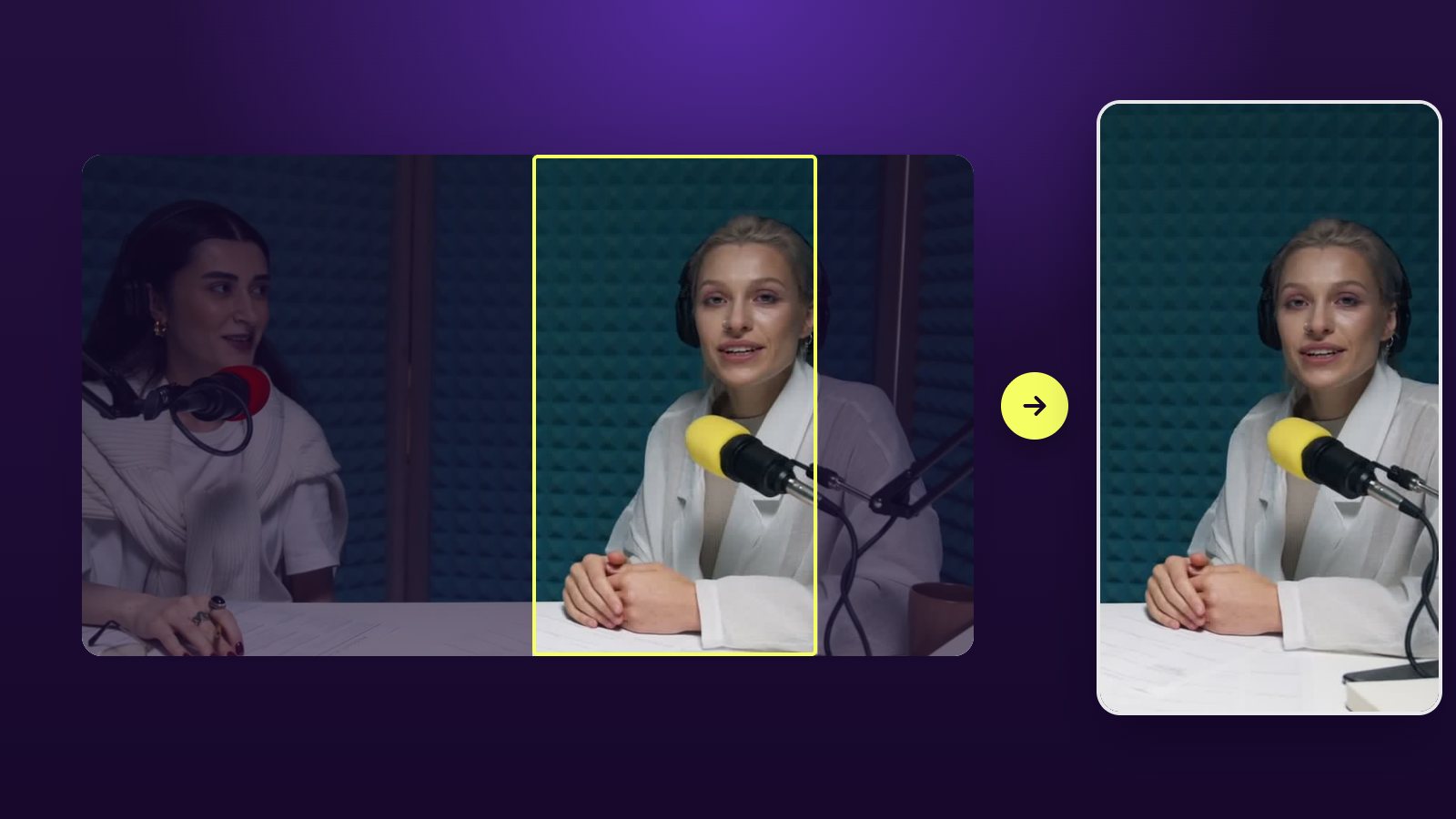
Once you have the line, move the start of the clip to it, even if a few seconds of context are lost. Viewers forgive a missing setup much more readily than a slow start. In Vidoveli you can move a clip’s start one word at a time against the full transcript, so the clip begins on the first word of the hook rather than half a second early.
If the hook arrives in the middle of an answer, try starting there and letting the explanation follow. A clip that opens on its conclusion and then earns it is one of the most reliable shapes there is.
Use the on-screen title as a second hook
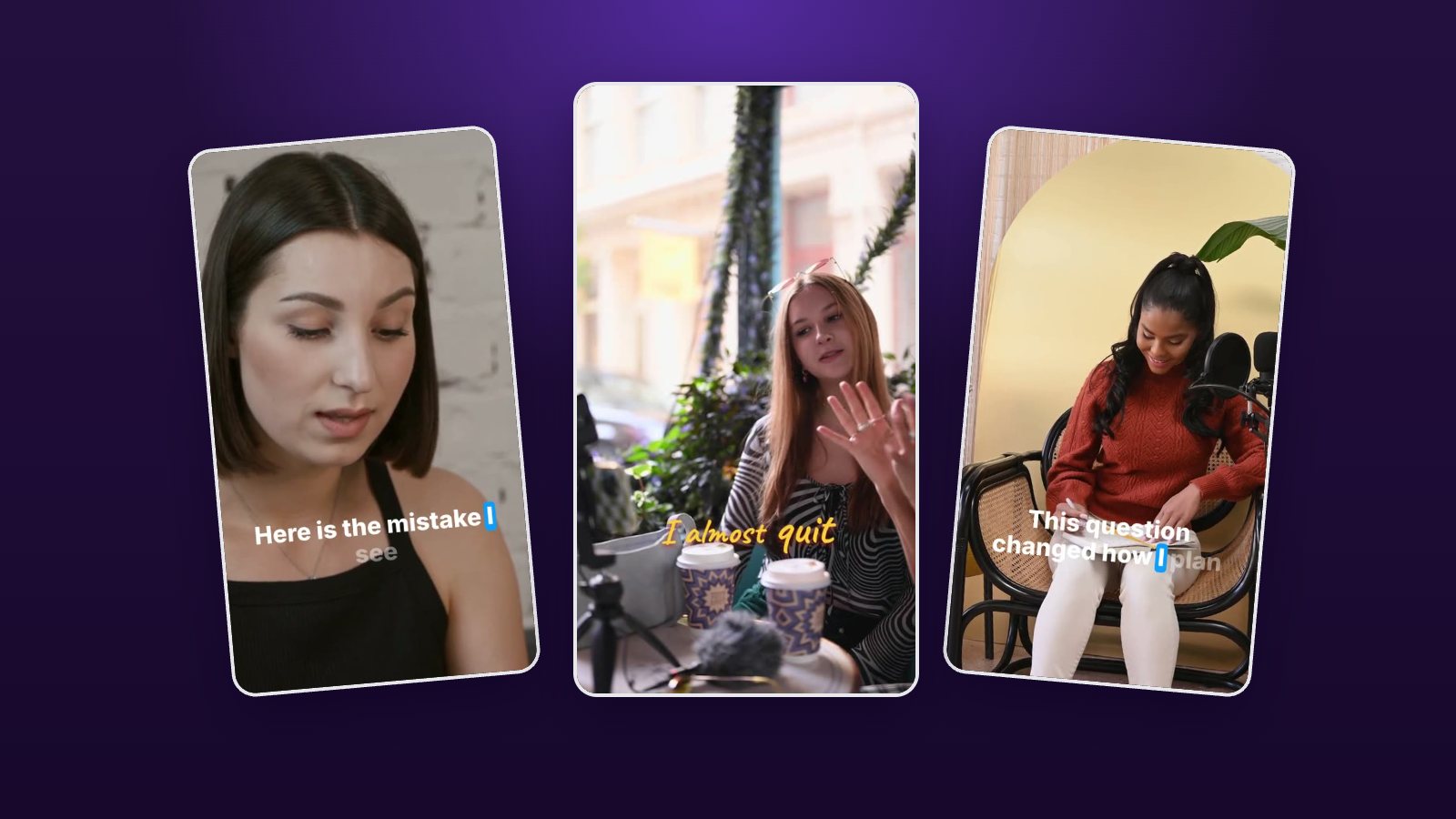
Most short clips carry a title at the top of the frame. Treat it as a second hook, one that works before the sound does. It should not repeat the first line; it should frame it. If the speaker opens with “It got 200 views”, a title like “Why effort isn’t enough” tells the viewer what the story is going to teach.
Hooks that backfire
A strong opening can still hurt a clip, and an account, when it promises the wrong thing.
- Promises the clip does not keep. People notice, and swipe faster next time.
- Vague teasers like “you won’t believe this”, which say nothing about the content.
- A hook that only makes sense with context the clip leaves out.
- Shock for its own sake, which attracts viewers who will not care about the rest of your work.
Test two openings
When you are not sure which line works better, make two versions of the same clip with different starting points and post them a week or two apart. Compare how many people kept watching past the first few seconds, which every platform shows in its analytics. Over a few months you will learn which openings work for your audience.
Let the AI shortlist, then judge
Vidoveli reviews every clip it proposes on six things, and the hook comes first: does the first line make someone stop scrolling? Recommended clips say why they were chosen, which often points straight at the hook. The TikTok clip maker and YouTube Shorts maker pages show how that works for each platform.
The final call is still yours. You know which hooks sound like you, and which ones you would rather not see on your channel.